
 Talk to Us
Andrew Malkinson APPEAL

FASO are delighted that Brian has the chance to educate those nay Sayers, of the mantra ‘there is no false allegations, or rarely’
False Allegations supported by the organisation APPEAL, have won Andrew Malkinson recent release, after 17 years. Again on false allegations of sex abuse.
We now want action from all UK governments to listen to the many experts on this issue of false allegations.
Parliament needs to Investigate the APPG Commission report on Miscarriage of justice findings, to find the reports from experts in this field.
Made by many, on how the system actually works, as opposed to how legislation says it should.
Also implement the full requirements set out by the Lord Henriques report into the Mets handling of sex allegations. (which also apply to many police forces in the UK)
Both men (along with all others equally affected) now have a long journey, with their family and friends, to try and come to terms with what has happened.
An evil practice of false allegations that is reported every day to our so few voluntary helplines for support.
Andy Malkinson - The Doubt dismissed
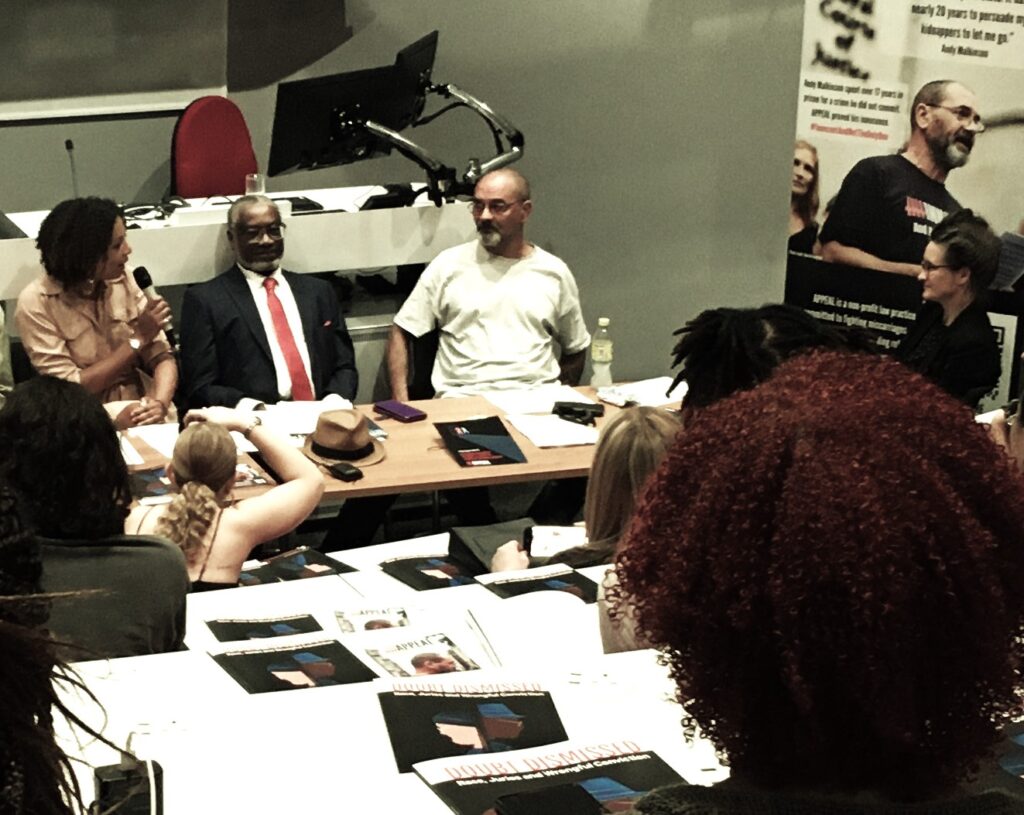
Doubt Dismissed: Race, Juries and Wrongful Conviction Conference
City University London, May 8th 2024
‘Majority verdicts wreck lives. A jury can’t make an informed decision based on deceit’ – Andy Malkinson
England and Wales dumped the principle of unanimous jury verdicts in 1967, in order to putatively combat ‘nobbling’, or juror intimidation, which was considered to be causing too many miscarriages of justice.
This meant that thereafter 10-2 decisions became more common, whereby if two jury members had reasonable doubt, they could be ignored under the aegis of ‘we’ve got what we need, thanks’. Majority verdicts resemble the ‘first past the post’ system in elections in this way – the expedience of convenience, actual justice potentially ignored.
According to Professor Angela Allen-Bell, visiting City University from Louisiana, ‘there is something really democratic about being in that jury box’, but that verdict-driven deliberations were woefully inadequate on both sides of the Atlantic. APPEAL charity lead Emily Bolton, also on the Doubt Dismissed panel and who also used to work in the US, said ‘I’d rather be wrongfully convicted in Louisiana than London’, highlighting the work still needing to be done in the capital.
A central issue is that majority verdicts in fact constitute ‘reasonable doubt’ in themselves. How many wrongfully or spuriously convicted individuals must there be languishing in cells, wondering why an argument landed differently with one jury member than another? Which is where race comes into it. Both Winston Trew and Dr David Sellu also recounted their decades-old stories, both with very different contexts, the PTSD emanating around the lecture theatre as they recounted details of how they could not have done what they were convicted of doing.
While criticising the adversarial nature of criminal trials, Dr Sellu also suggested AI may be a more sure way of guaranteeing a just outcome – but we would then be entrusting machines to decide the fate of human behaviour, which is a road that needs very careful navigation. Winston Trew for his part understood his conviction to be a ‘deterrent sentence’, which had echoes of similarly disastrous joint enterprise sentences.
David Gough, a researcher from the audience, asked if the panel thought jury members should have to explain their decisions, as they do in some other countries – and it’s increasingly difficult to find arguments against this save for the principle of ‘judicial secrecy’. It’s this principle, compounded with behavioural groupthink studies that demonstrate how difficult it is to stand up for something when everyone else in the room is against you, that is behind many wrongful convictions in the first place. (This is the subject of genre classic Twelve Angry Men of course – a little-mentioned cultural subtext to today’s event.)
New household name and beacon of the False Allegations Movement Andy Malkinson also spoke, in a question and answer session with Emily Bolton. As calm and insightful as he was on the steps of the Court of Appeal following his exoneration in 2023, after twenty years, Malkinson said: ‘Majority verdicts wreck lives. A jury can’t make an informed decision based on deceit’.
Greater Manchester Police suppressed exonerating DNA evidence in his case for the last twelve years of his sentence, and knew early on that he couldn’t have committed the alleged crime. Alleged because, as Felicity Sryjak and Bob Woffinden have both written, there is scant evidence that the charge on which Malkinson was convicted actually occurred. There has been tumbleweed from the complainant since his exoneration, and also from GMP concerning a man they arrested at the time.
But as all the speakers at this event – including Nisha Waller, Naima Sakande, and APPEAL’s Matt Foot – know, there is usually light as well as darkness, and today it was in the announcement that City University London was to launch its own Innocence Project (joining long-established enterprises at the universities of Bristol, Cardiff, Greenwich and elsewhere). Also as Nisha Waller said, there was no ‘rage’ at any individual jury members from the exonerees themselves; this is a systemic problem, not a personal one.
Along with IPP and the aforementioned joint enterprise sentences, let alone daily stories on the manipulation of ‘believe the victim’ policy and media support of that narrative, the jury system is under intense pressure. While it is in dire need of reform, we need to be vigilant of whatever would replace it – and how it might be replaced.
 Previous Post
 Next Post